 Ligue 1
3 May 2026, 13:00
Decathlon Arena - Stade Pierre Mauroy, Lille
Guillaume Paradis, France
 Lille
Lille29’H. Haraldsson
43’T. Meunier
59’A. Mandi
66’N. Mukau
74’R. Perraud
74’F. Correia
85’A. Bouaddi
85’T. Meunier
Le Havre
L. Gourna-Douath5’
I. Soumare33’
A. Seko35’
S. Boufal65’
F. Doucoure65’
I. Soumare74’
Y. Zouaoui75’
A. Samatta88’
AI Post-Match Analysis
Match Rating
4.8/10Man of the Match
H. Haraldsson
Key Moments
1Haraldsson’s 29’ goal, which reflected Lille’s dominance in possession and their ability to break down Le Havre’s defense through precise passing.
2Soumare’s 33’ equalizer, highlighting Le Havre’s efficiency in transitioning from defense to attack despite minimal possession.
3The accumulation of yellow cards for Le Havre (three in total), which may have disrupted their tactical approach and led to increased pressure from Lille.
Tactical Insights
Lille’s high possession and passing accuracy (424 passes) underscored their focus on controlling the game through structured build-up play, though their lack of a second goal suggests defensive vulnerabilities in transitions.
Le Havre’s minimal shot count (2) and reliance on counterattacks indicate a defensive approach that prioritized containment over proactive play, which limited their chances but allowed them to remain competitive.
The match between Lille and Le Havre unfolded as a tightly contested encounter, with both teams scoring in the first half to leave the halftime score at 1-1. Lille’s dominance in possession (66%) and statistical metrics such as shots on target (10-2) and passes (424-177) highlighted their control of the game, yet Le Havre’s resilience in equalizing despite being outplayed suggests tactical adaptability. Lille’s early goal by Haraldsson at 29’ showcased their attacking efficiency, but Le Havre’s swift response through Soumare at 33’ demonstrated their ability to capitalize on rare opportunities. The match remained evenly balanced in the second half, with both teams failing to convert further chances, leading to a draw. Lille’s high press and structured build-up were evident, but Le Havre’s defensive discipline and limited but effective counterattacks kept them in the game. The accumulation of yellow cards (three for Le Havre, two for Lille) indicates a physically intense match, though Le Havre’s disciplinary issues may have hindered their ability to maintain possession and structure.
Match Highlights
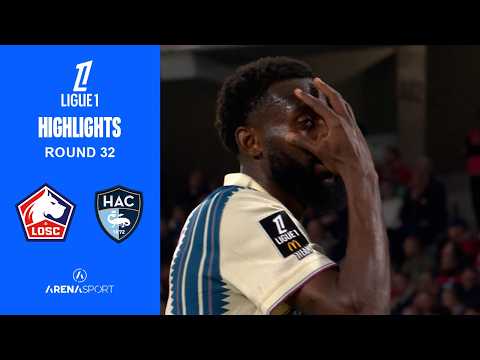
Lille - Le Havre 1:1 | LIGUE 1 (32. kolo) | 03. maj 2026.